A concrete patio and pavers are two ways to surface the same outdoor space. A concrete patio is a single poured slab. Pavers are individual units, usually made of cement and aggregate, set over a compacted base and locked together with sand. Concrete costs less up front. Pavers cost more but crack less and can be repaired one unit at a time. In Henderson, where heat and shifting soil stress rigid surfaces, many homeowners find the paver premium worth paying, while concrete still wins on a tight budget or a plain, flat yard.
This article explains why the choice matters in the Las Vegas valley, then compares both options on cost, durability and looks, with price ranges and a worked example. You will also see how to match the material to your yard, when pavers can go over an existing slab, and what to ask a contractor before you sign anything.
JR's Lawn Maintenance has worked on Southern Nevada yards for more than 20 years, and we install pavers. That means we have a stake in this topic, so we will tell you plainly where concrete is the better call.
Why the material you pick matters in Henderson
The material matters because a patio is the one surface you cannot easily change later, and local heat and soil punish rigid slabs. A wrong choice shows up as cracks, trip hazards or a patio you avoid in July.
What a concrete patio and a paver patio actually are
A concrete patio is one poured slab, finished by hand and cut with control joints so it cracks along planned lines. Stamped and stained versions press a pattern and color into the surface while it is still wet, to imitate stone, slate or wood.
Pavers are precast units laid over a prepared base. Most are concrete pavers , made from cement, sand and aggregate, which is why people search for cement patio pavers or patio concrete pavers. Brick and natural stone pavers exist too. The shared word "concrete" hides the real difference, which is one rigid slab versus many small units on a flexible base.
What the desert does to hard surfaces
Valley summers regularly pass 100°F, and nights cool off enough that a surface expands and contracts every day. Under the surface, many yards sit on caliche, a hard, cemented soil layer, and some areas have expansive clay that swells when irrigation or rain soaks it. Uneven moisture and ground movement are what stress a patio most.
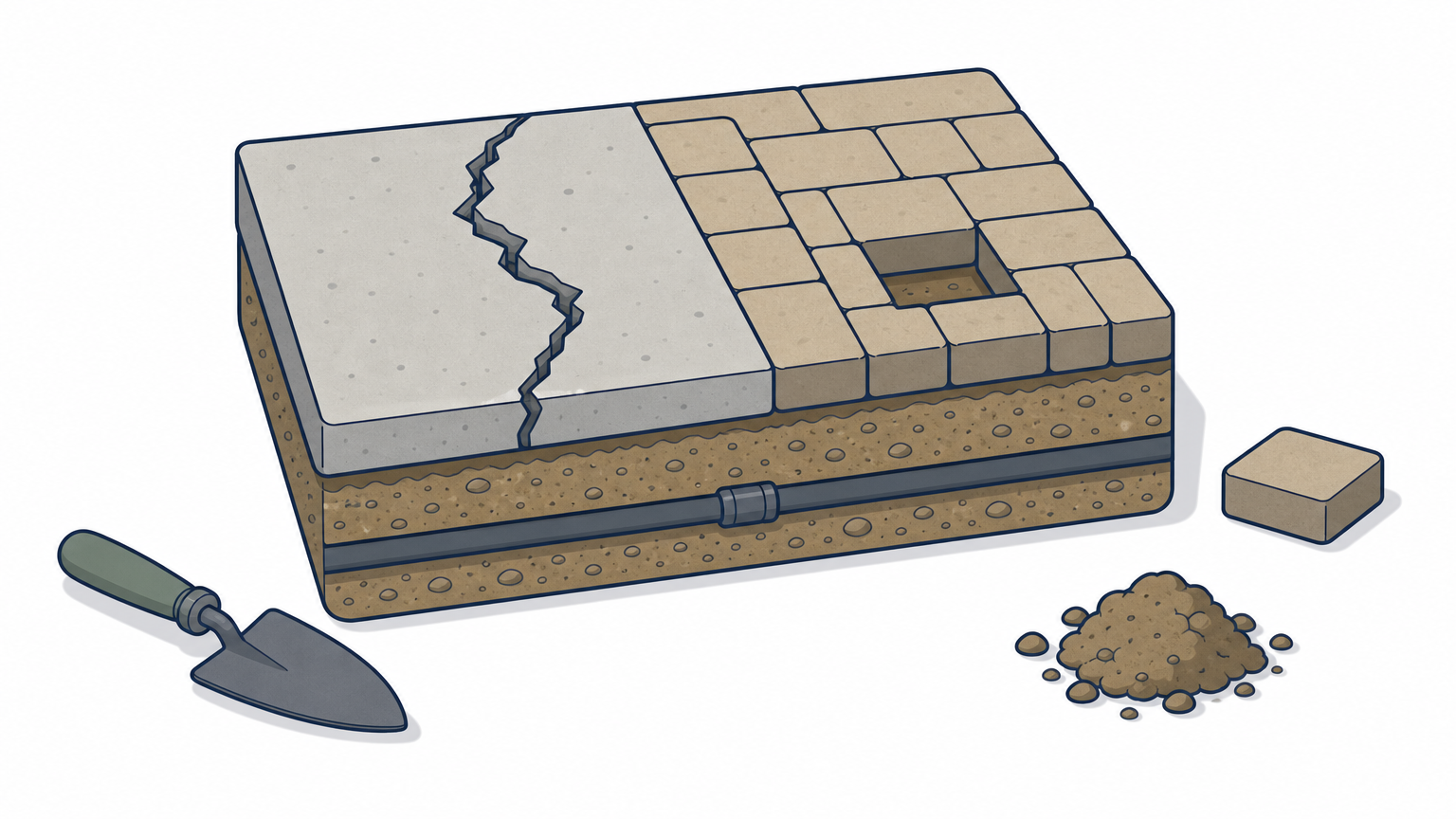
A slab cannot flex with that movement. Hairline cracks are common and mostly cosmetic, but wider cracks and uneven edges happen. Pavers shift slightly as a system and stay intact, and you can lift a unit to fix the base or an irrigation line underneath.
A slab fights ground movement and eventually loses, while pavers move with it.
Concrete patio vs pavers on cost, durability and looks
Concrete wins on upfront cost, pavers win on repairability and long-term appearance, and looks depend on whether you want a plain surface or real pattern and color. The details below put numbers on each.
What each costs
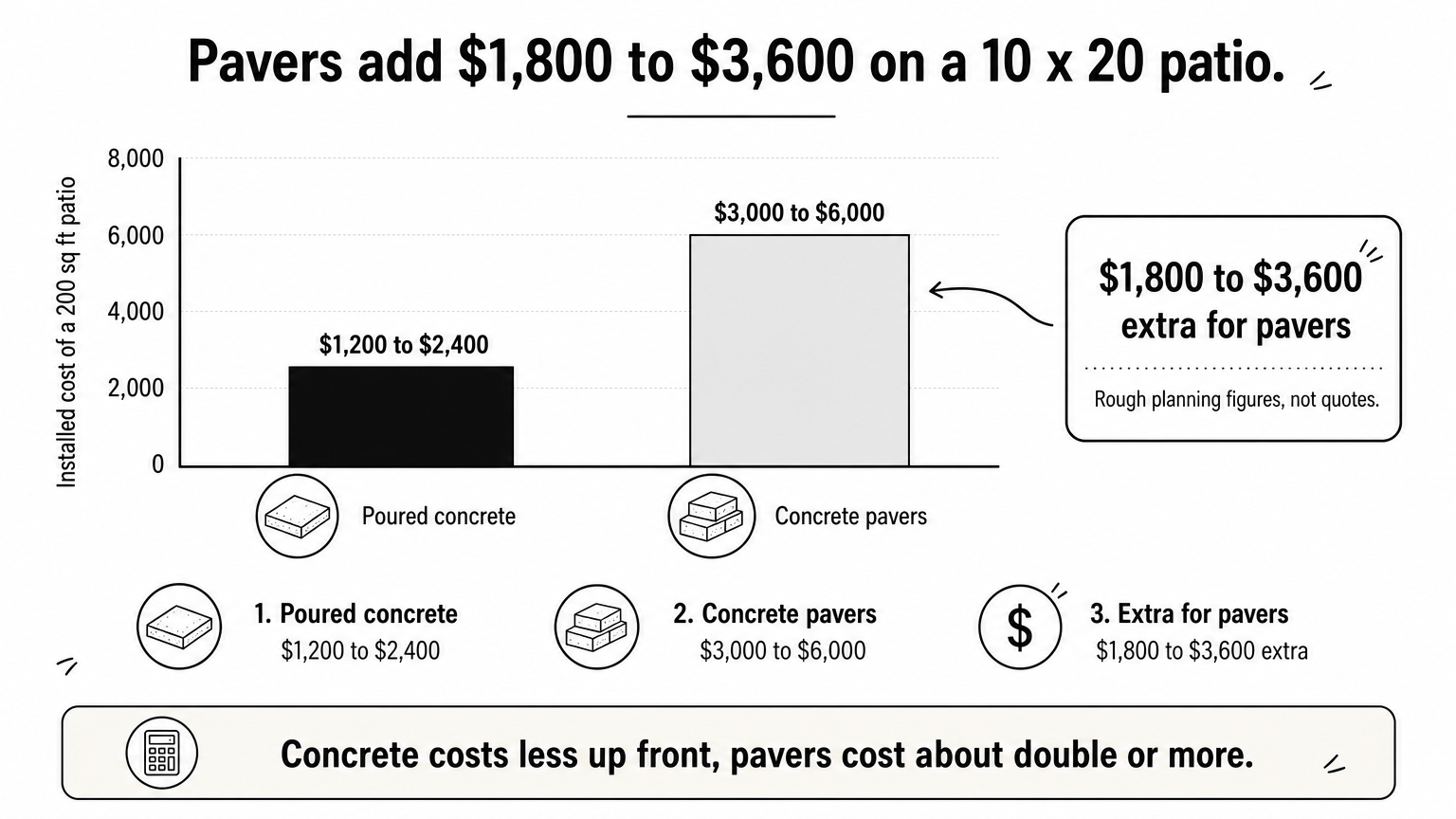
Poured concrete is the cheaper option, and pavers typically cost about double or more per square foot. The ranges below are rough planning figures for installed residential work, not quotes. Local pricing varies with site access, base conditions and design.
| Poured concrete | Concrete pavers | |
|---|---|---|
| Installed cost per sq ft | $6 to $12 | $15 to $30 |
| 10 x 20 patio (200 sq ft) | $1,200 to $2,400 | $3,000 to $6,000 |
| 1,000 sq ft | $6,000 to $12,000 | $15,000 to $30,000 |
On a 10 by 20 patio at these rates, pavers add roughly $1,800 to $3,600 . Small jobs often run into contractor minimums, which is why local marketplace listings put a typical Henderson concrete patio at about $2,500 to $7,000 rather than near the bottom of the per-foot range. Stamped concrete costs more than a plain broom finish, so the gap with pavers narrows when you want a decorative look.
How they hold up over time
Concrete needs little care at first, but stamped surfaces should be resealed every two to three years, and cracks are patched rather than truly fixed. A patch rarely matches the original color. Pavers need joint sand topped up, occasional weeding of the joints, and now and then a re-leveled section where the base settled.
| Poured concrete | Concrete pavers | |
|---|---|---|
| Cracking | Likely over time | Rare, joints absorb movement |
| Repair | Patch or replace the slab | Lift and replace single units |
| Upkeep | Sealing for stamped finishes | Joint sand, weed control |
| Typical life | About 20 to 25 years | Often 25 years or more |
Those lifespans assume good installation. In both cases the base preparation matters more than the surface material.
How they look
Stamped concrete can imitate slate or flagstone, but the color sits mostly in the surface and the pattern repeats. A crack cuts straight through the design. Pavers carry color through the unit and come in many shapes, so you can use herringbone or running-bond patterns , borders and inlays that a slab cannot match.
Heat is a wash. Any hard surface gets hot in direct desert sun, and dark colors run hotter than light ones. Choose a lighter shade and add shade near seating, whichever material you pick.
Concrete is cheaper to build, but pavers are cheaper to fix and age more gracefully.
How to choose between a concrete patio and pavers
Choose concrete for a large, plain, budget-driven patio on stable ground, and choose pavers when you want pattern, easy repair or access to what lies underneath. Your site and your priorities decide it, not a general rule.
Match the material to your situation
Pick the column that sounds most like your project.
- Concrete fits when the budget is the main limit, the area is large and flat, you want a simple finish, and the ground has been stable for years.
- Pavers fit when you want patterns or color, your current slab is cracking, the yard has slopes or tree roots, or irrigation and utility lines run beneath the patio and may need service.
- Either works when you plan a pool-side or backyard seating area and care most about shade and color choice.
If you are replacing a cracked slab and want the new surface to last, pavers usually justify the extra cost. If you are covering a bare patch of dirt next to a shed, concrete is often the practical call.
Putting pavers over an existing concrete patio
Pavers can go over a sound concrete slab, which saves demolition and haul-away. The slab needs to be solid, level enough and draining away from the house . Installers typically use pavers made for overlays, set in bedding sand or adhesive with an edge restraint to hold the field.
Check the new height before you commit. Pavers add thickness, so thresholds, door sweeps and drainage slopes must still work. A slab with large cracks, heaving or settled sections should come out instead, because those problems will telegraph through the new surface.
Pavers over concrete only work when the slab underneath is stable and sloped correctly.
How to hire a local installer and what to ask
Hire a licensed contractor who can describe the base, the drainage and the edge restraint in plain terms, and who offers a written scope before work starts. Most paver failures trace back to these hidden parts, not to the pavers.
What a proper paver installation includes
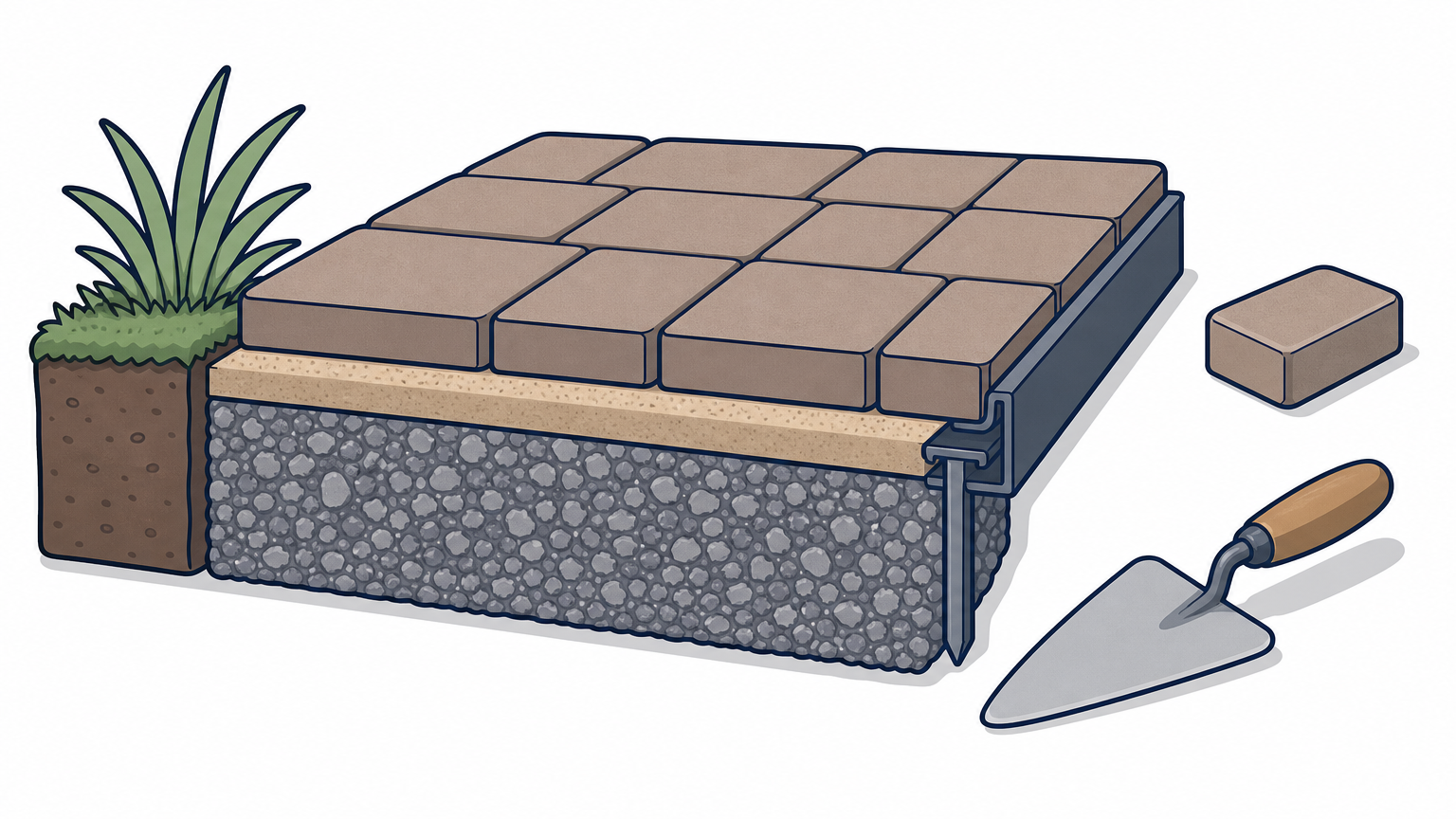
A paver patio should include these steps, in this order:
- Excavate the area and remove vegetation and loose soil.
- Build a compacted crushed-rock base. Patio bases commonly run about 4 to 6 inches, and driveways go deeper.
- Grade the base with a slight slope away from the house, commonly about 1/4 inch per foot.
- Spread and level a thin layer of bedding sand.
- Lay the pavers in the chosen pattern and cut the edges.
- Install edge restraint, compact the surface and sweep in joint sand.
If a bid skips the base or says nothing about compaction and slope, ask why before accepting it.
Vetting a Henderson contractor
Nevada requires a contractor license for most jobs above a small dollar threshold, so ask for the license number and confirm it with the Nevada State Contractors Board. Also ask for proof of insurance , the base depth and compaction method, the warranty terms, and a written estimate that lists materials and scope.
JR's Lawn Maintenance is licensed, bonded and insured under Nevada contractor license #0091849, and we install pavers, flagstone and retaining walls. Estimates are free and done on site, with no pricing from photos, and they stay valid for seven days. We do not offer landscape design, so bring your own layout.
A good bid describes the base and drainage in detail, not just the pavers on top.
Choosing your patio material
For most Henderson homeowners the choice comes down to budget now versus repairs later. Concrete is the lower-cost surface and suits large, simple, stable areas. Pavers cost more up front, resist cracking in shifting desert soil, and let you replace a single damaged unit instead of patching a slab. A sound slab can sometimes be covered with pavers, and either material gets hot in direct sun, so color and shade matter.
Once you know which direction fits your yard, get a written estimate that spells out the base, slope and edge restraint. If you lean toward pavers and have a layout in hand, you can request a free on-site estimate from JR's Lawn Maintenance and compare it against any other bid you collect.