Pavers for Patio: 4 Concrete and Stone Types in Las Vegas
The best pavers for patio projects in Las Vegas come down to budget and look. Concrete interlocking pavers suit most homeowners because they cost the least and come in the widest range of colors. Large-format concrete slabs suit a clean, modern patio with fewer joints. Travertine suits pool-side patios where bare feet matter. Flagstone suits a natural, irregular look next to desert rock. Whatever you pick, choose a light color, because dark surfaces hold a lot of heat in Southern Nevada sun.
The hard part is that suppliers list hundreds of options. Prices come per piece, per pallet or per square foot, and few listings tell you what a choice does to the total for a real patio. This article sets four types side by side, gives a material price range for each, and works a 20x20 patio through all four so you can compare totals.
At JR's Lawn Maintenance, we install paver patios, walkways and flagstone for homeowners in Henderson, Las Vegas, Summerlin and nearby communities, and we have more than 20 years of experience. We do not do landscape design, so you need a layout before we install. Choosing the material first makes that plan, and your estimate, much easier.
1. Concrete interlocking pavers
Concrete interlocking pavers are molded concrete units that lock together over a compacted base. They are the standard choice for a concrete pavers patio because they balance price, durability and variety.
What you get
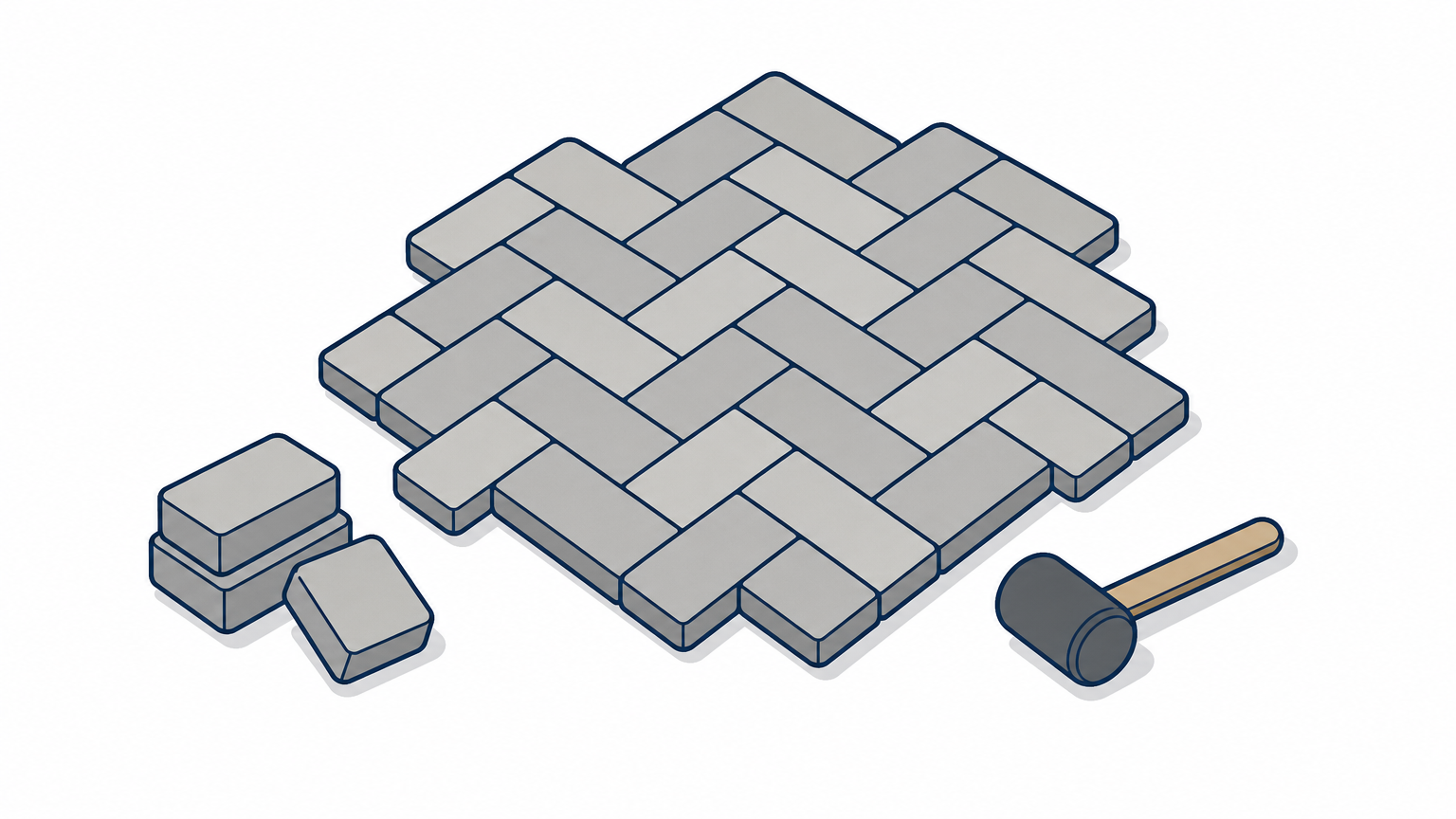
Residential units are typically about 2 3/8 inches thick. You will find them in these forms:
- Shapes: 4x8 inch bricks, 12x12 and 16x16 squares, hexagons and mixed-size sets.
- Finishes: smooth, textured and stone-look surfaces.
- Colors: gray, brown, red, tan and charcoal blends.
- Patterns: running bond, herringbone and basketweave. Herringbone locks together best under heavy use.
Individual units can be lifted and replaced, so a stained or damaged paver does not mean redoing the patio.
Cost and who it suits
Expect roughly $2 to $6 per square foot for the pavers alone, depending on size, finish and brand. That makes this type the cheapest of the four. Poured concrete often costs less upfront than pavers, but a slab cracks as one piece while pavers can be repaired one at a time.
This type suits you if you want the most color and pattern choice for the lowest material price. In the desert, skip the dark reds and charcoals for a sunny patio and pick tan or light gray.
Concrete pavers give you the widest choice of color and shape for the lowest material price.
2. Large-format concrete slabs
Large-format concrete slabs, sold as patio stones, are bigger and thinner than standard pavers. Common sizes are 16x16, 24x16 and 24x24 inches, and they give a patio with stone-look pavers a modern, tailored appearance.
What you get
Fewer pieces mean fewer joints, which reads as a cleaner surface. Slabs are usually about 2 inches thick and heavy, and a 24x24 piece can weigh 80 pounds or more, so installation is slower than with small units. Their size also makes the base critical. A slab laid on an uneven or poorly compacted base rocks and cracks. Caliche, the hard mineral layer common in Southern Nevada soil, needs proper excavation and a compacted base, not a thin layer of sand.
Cost and who it suits
Budget about $4 to $10 per square foot for the slabs. Labor tends to run higher than for small pavers because each piece must be lifted into place and leveled.
Slabs suit contemporary homes and homeowners who dislike a busy pattern. They are a poor fit for curved patio edges, where cutting large pieces wastes material.
Large slabs look sharp, but they are only as good as the base under them.
3. Travertine pavers
Travertine is a natural limestone with a soft cream, ivory or walnut tone, and it is among the most popular stone patio pavers around Southern Nevada pools. Its main advantage is comfort in the heat.
What you get
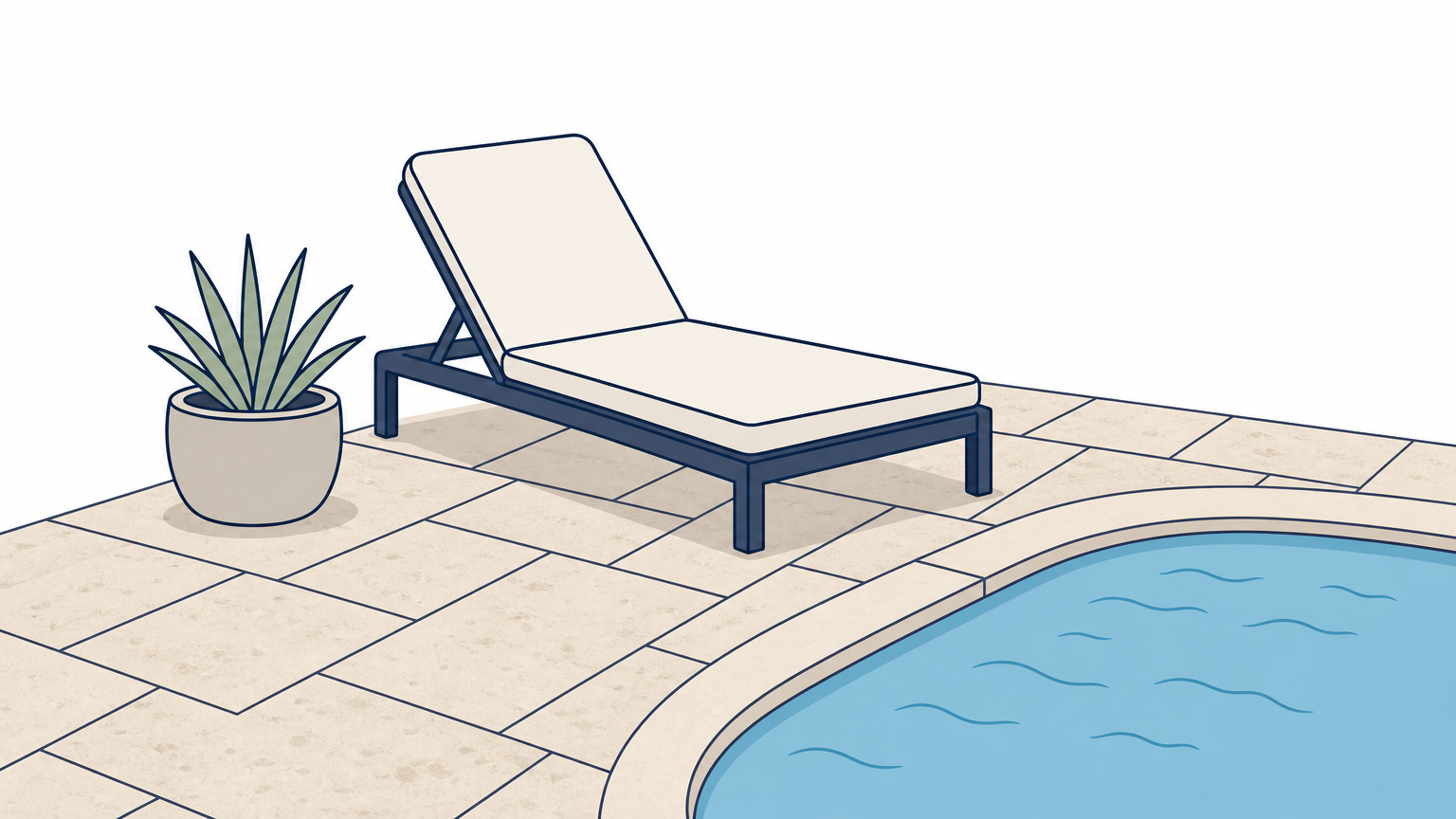
Light-colored travertine stays cooler underfoot than dark concrete in direct sun. Typical sizes are 16x16 and 12x24 inch pieces, often laid in a mixed "French" pattern. Choose a tumbled or textured finish for traction near water. Honed, polished faces get slippery when wet. Travertine is porous, so plan on sealing it and resealing on a schedule, and keep acidic cleaners off it.
Cost and who it suits
Material runs roughly $6 to $15 per square foot , with premium grades above that. Travertine suits pool decks, entertaining patios and homeowners who want a high-end look and will accept some sealing upkeep. If you want zero maintenance, concrete is easier.
Travertine costs more than concrete, but a light-colored stone is the most comfortable underfoot in Las Vegas heat.
4. Flagstone
Flagstone is irregular, flat-cut natural stone such as sandstone, quartzite or limestone. It is the right pick when you want the patio to look like part of the landscape, not a manufactured surface.
What you get
Pieces are usually 1 to 2 inches thick and vary in shape and tone, so no two patios match. Joints are filled with sand, decomposed granite or mortar, depending on how formal you want the result. Because every piece is different, the crew has to fit them like a puzzle. That takes more labor hours than laying uniform pavers, and the surface is less flat, so tables and chairs may wobble a little.
Cost and who it suits
Plan on about $8 to $18 per square foot for the stone, plus higher labor. Flagstone suits informal patios, fire pit areas and yards built around decorative rock and desert plants. It is not the best choice for a dining area where you need a perfectly level surface.
Flagstone gives the most natural look, and you pay for it in both material and labor.
What a 20x20 paver patio costs by type
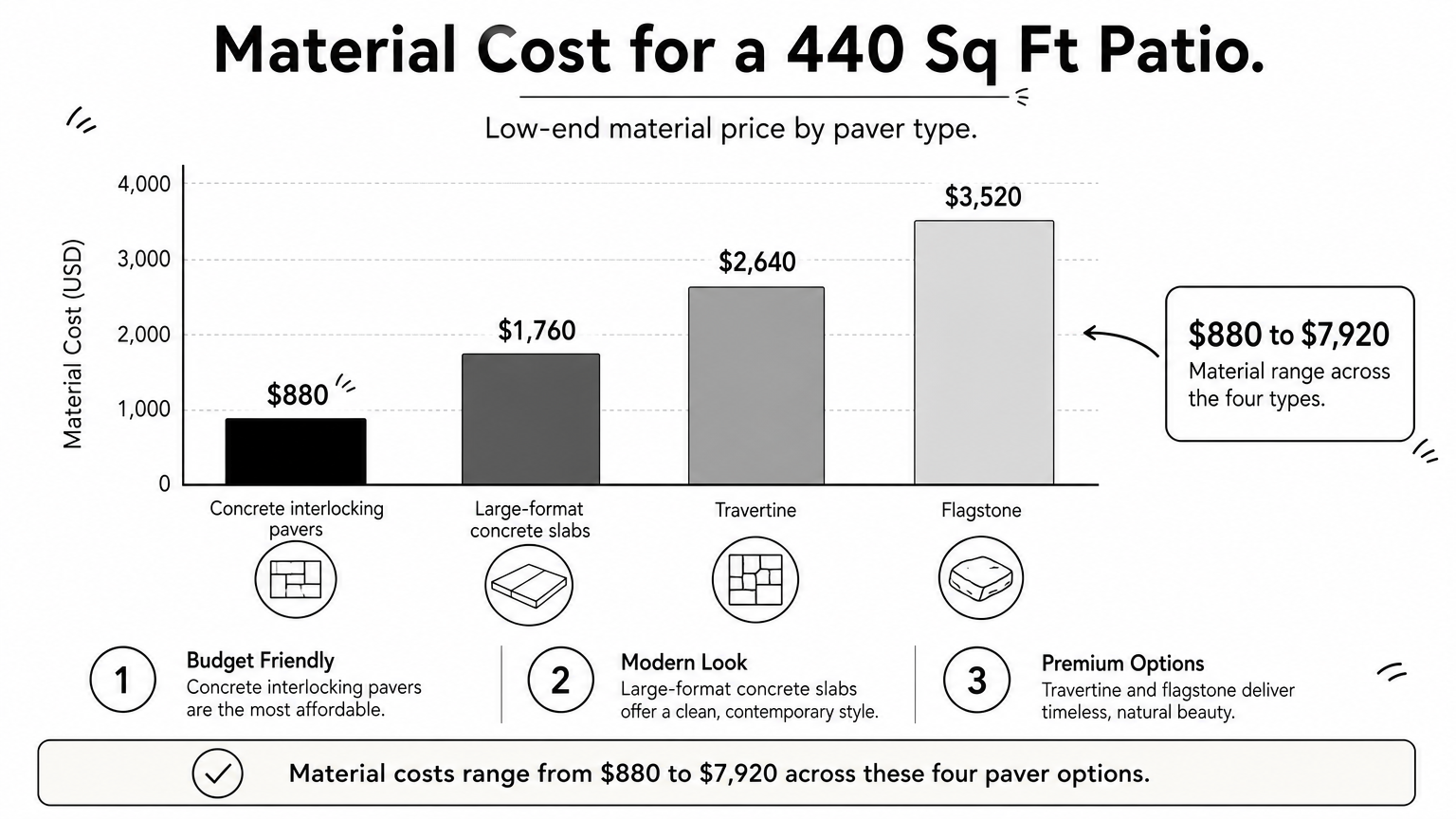
A 20x20 patio is 400 square feet, and ordering about 10% extra for cuts and breakage brings it to 440 square feet of pavers . Material cost across the four types ranges from under $1,000 to nearly $8,000.
Material cost side by side
These are material-only ranges based on typical retail pricing. Brand, finish and supplier change them, so treat them as planning figures.
| Paver type | Material per sq ft | 440 sq ft, low | 440 sq ft, high |
|---|---|---|---|
| Concrete interlocking pavers | $2 to $6 | $880 | $2,640 |
| Large-format concrete slabs | $4 to $10 | $1,760 | $4,400 |
| Travertine | $6 to $15 | $2,640 | $6,600 |
| Flagstone | $8 to $18 | $3,520 | $7,920 |
What else changes the total
Pavers do not go on bare dirt. They need excavation, a compacted aggregate base, a bedding layer and edge restraints, or they shift and sink. This prep and the labor can match or exceed the cost of the pavers, so the material table is only part of your budget.
Because site conditions drive the price, we do not quote from photos. JR's Lawn Maintenance gives a free, no-obligation on-site estimate for paver patios and walkways, and the estimate is valid for 7 days. Bring your layout, since we install from your plan.
How to choose between the four
Work through these questions in order:
- Sun exposure: if the patio gets all-day sun or surrounds a pool, favor light concrete or travertine.
- Budget: if the total must stay low, concrete pavers win.
- Look: choose slabs for modern lines, travertine for a refined look and flagstone for a natural one.
- Upkeep: concrete needs the least. Travertine needs sealing.
Set your budget from the installed price, not the material price, because base work and labor can double the number.
Choosing your patio pavers
For most Las Vegas homeowners, concrete interlocking pavers in a light color are the practical default. Step up to large slabs for a modern look, travertine for comfort by the pool, or flagstone to match a desert landscape. Compare totals for your square footage, since base prep and labor change the picture as much as the paver itself.
Once you have chosen a material and have a layout, the next step is a price based on your actual site. You can request a free on-site estimate for your paver patio and get an installation quote for the type you picked.