

Patio Pavers Designs: 6 Ideas for Hot, Sunny Backyards
The best patio pavers designs pair a pattern that suits how you use the yard with colors that stay comfortable in direct sun. Herringbone suits you if you want a durable classic. Large-format pavers suit a modern house or a small patio. A two-tone "rug" layout suits you if you host often. Pavers set in gravel suit a tighter budget and a desert look. A fire pit circle or a shaded pergola patio suits you if you use the yard mostly in the evening.
Photo galleries show hundreds of patios, but they rarely tell you which pattern to pick or how many pavers to order. They also skip what a dark surface feels like at 3 p.m. in July. You end up with a folder of saved pictures and no plan you can hand to anyone.
This article covers six designs, each broken down the same way: how the design works, who it suits, and what to plan before you build. JR's Lawn Maintenance installs paver patios for homeowners across Southern Nevada. We install from your plan rather than draw one, so treat these ideas as the starting point for the layout you bring.
1. Herringbone field with a border
Herringbone is the safest pick for a backyard paver patio. It locks tightly and looks good on almost any home. It is also the layout to choose if you expect heavy use.
How the design works
Herringbone lays rectangular pavers in a zigzag, usually at 45 or 90 degrees to the patio edges. Each piece locks against its neighbors from several directions, so the surface resists shifting under chairs, grills and foot traffic. That is why it is the most popular paver pattern and a dependable default for concrete pavers.
Add a border row around the field and the patio looks finished. A soldier course, with pavers set end to end, or a contrasting color works well. The border also gives the pattern a clean place to stop at walls, steps and planting beds. The 45 degree version looks busier but makes more triangular cuts at the edges. The 90 degree version wastes less material.
Herringbone is the pattern to pick when you want the strongest interlock and the fewest regrets.
Who it suits and what to plan
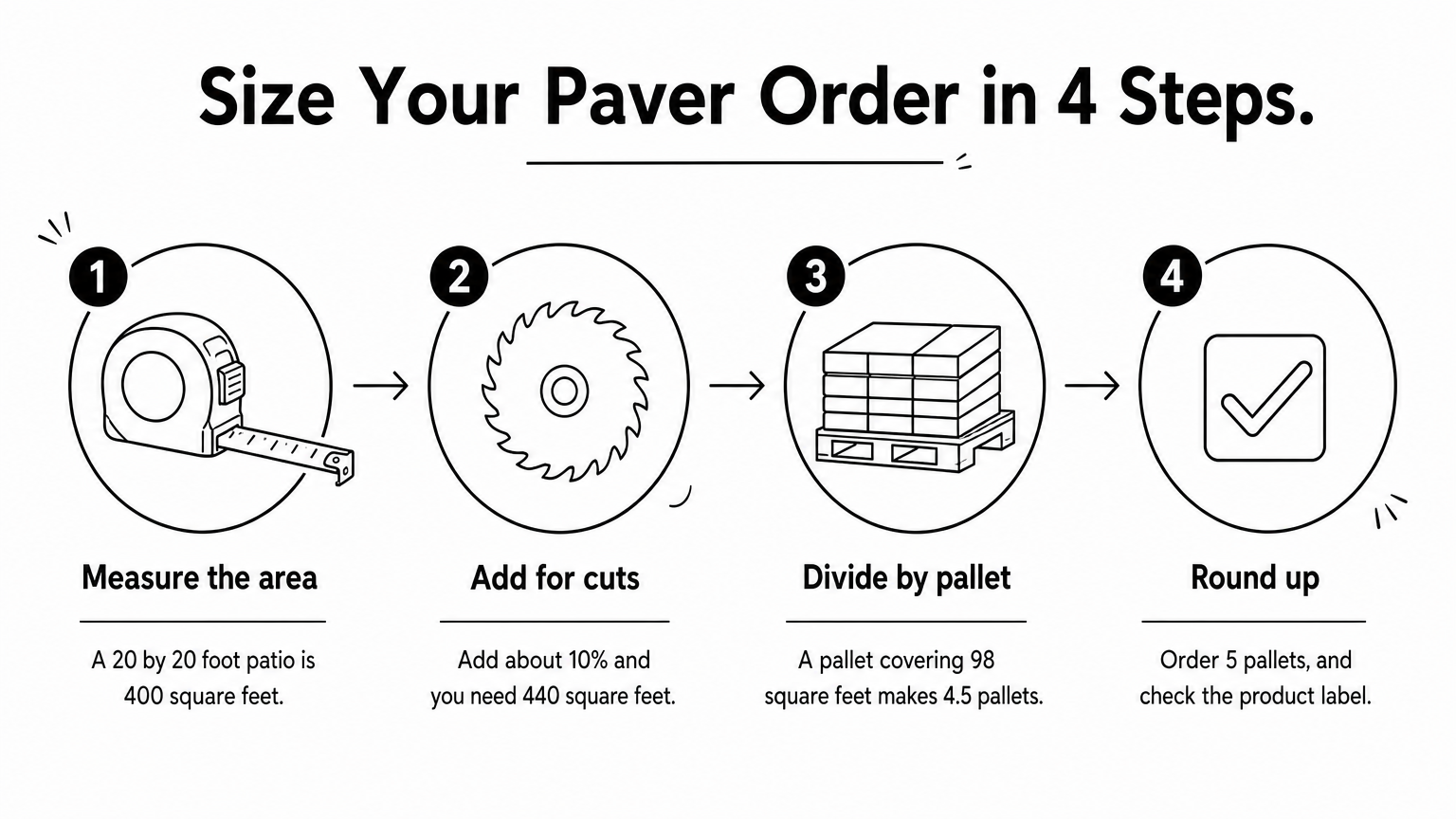
This design suits you if you want a classic look and expect plenty of traffic. A 20 by 20 foot patio shows how to size the order. That is 400 square feet. Add about 10% for cuts and you need 440 square feet. A pallet that covers 98 square feet, a common size for concrete pavers, makes 4.5 pallets, so you order 5. Coverage per pallet varies, so check the product label. Material is only part of the cost. Base depth, access to the yard and labor decide the rest, so a real number needs an on-site look.
- Order 10% to 15% extra for herringbone cuts.
- Set edge restraints along every side that is not against a wall.
- Pick the border color before you pick the field color.
2. Large-format pavers in running bond
Large-format pavers in one neutral color are the cleanest modern option. They also make a small patio look bigger. If you search for backyard patio ideas with pavers and want something sleek, start here.
How the design works
Running bond offsets each row by half a unit, like brickwork. With large rectangular pavers the pattern reads as long, calm lines. There are fewer joints, so the surface looks like one smooth plane. Modern hardscape keeps moving toward monochrome palettes and big formats , and this is the simplest way to get that look without custom stone.
Large units are unforgiving. Each paver is heavy, which means more handling and sometimes equipment. The base has to be perfectly flat, because a slightly high edge shows from across the yard. Smooth finishes also show dust, grease and scuffs sooner than textured ones. Choose a finish with some grain if you will grill on the patio.
Fewer, larger pavers make a small patio feel calmer and larger, but only if the base underneath is flawless.
Who it suits and what to plan
This idea suits modern or minimalist homes and compact patios of roughly 10 by 12 feet or less. It also suits anyone who dislikes busy patterns. In full sun, a light gray or sand tone stays more comfortable underfoot than charcoal.
- Ask how heavy each unit is and how it will be moved into the yard.
- Keep joint widths identical across the whole patio.
- Place full-size units where the eye lands first and push cuts to the edges.
3. Two-tone paver rug with an accent band
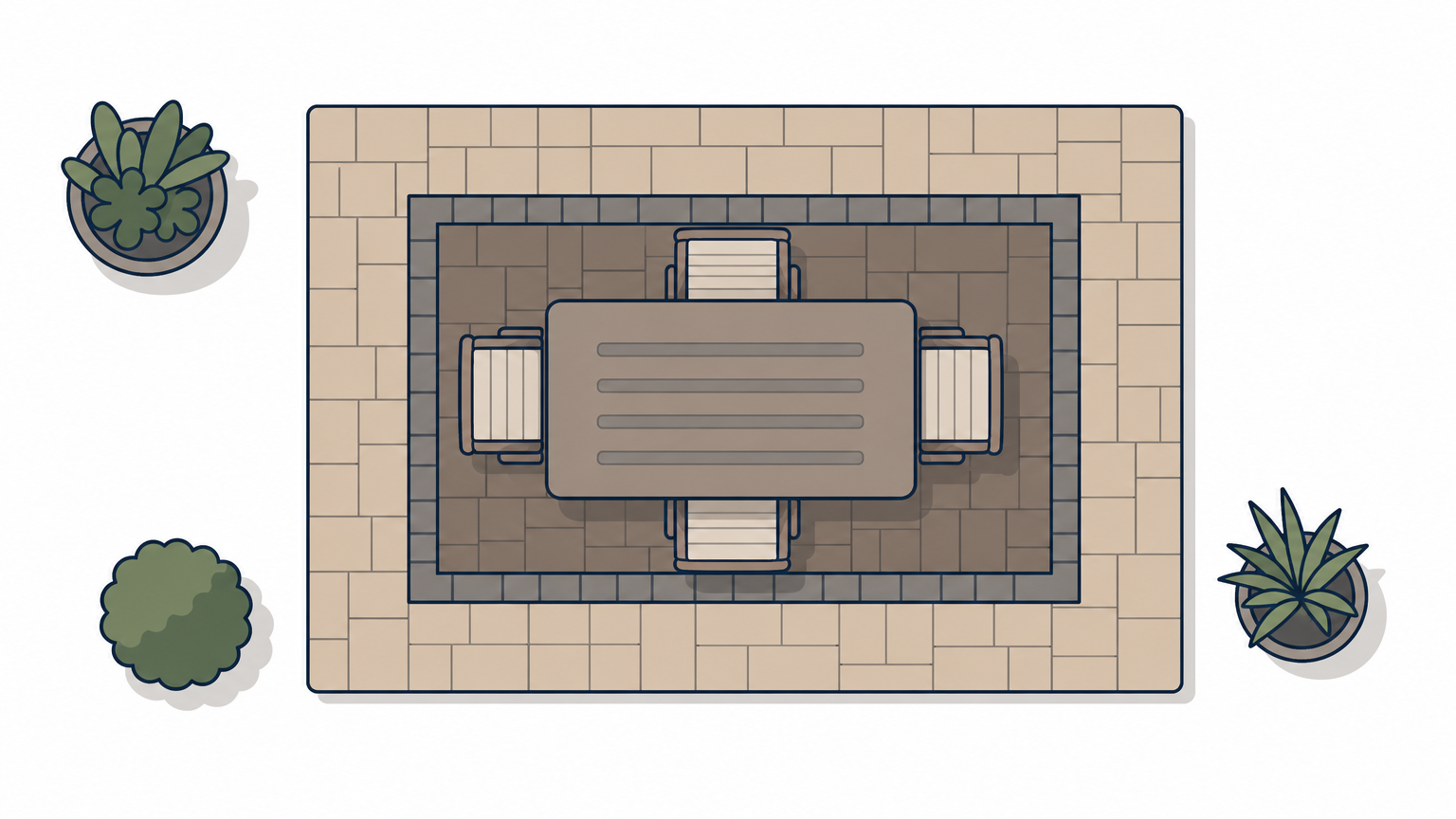
A paver rug divides one slab of patio into separate zones without building a single wall. It works best on patios of 300 square feet or more, where you want a dining area and a lounge area to feel different.
How the design works
You lay most of the patio in one color and pattern. Inside it you set a rectangle or circle in a second color or a different pattern. A thin accent band around that inset finishes the edge. The inset becomes the "rug" under a table or sofa set, and the surrounding field acts as the floor around it. It is a patio design with pavers that gives you texture and contrast while keeping one consistent material.
Color choice matters more than usual in the desert. Lighter tans, creams and warm grays reflect more sunlight and stay cooler than dark pavers. Keep the dark tones for a narrow accent band, not for the whole field. Natural flagstone also works as an accent insert beside manufactured pavers.
Use the field color for comfort and the accent color for personality.
Who it suits and what to plan
This layout suits hosts and families who use several areas at once. It is also the best way to add visual interest without raising the cost much, because the extra color is limited to one zone.
- Limit the palette to two or three colors.
- View sample pavers in direct afternoon sun, since color shifts outdoors.
- Size the dining rug about 3 feet larger than the table on every side so chairs stay on it when pulled out.
4. Pavers set in decorative gravel
Pairing pavers with decorative rock is the most budget-friendly of these patio ideas. It is also the one that fits Southern Nevada landscaping best, because it uses fewer pavers and no water.
How the design works
You use large square pavers as stepping surfaces with rock filling the spaces between them, or you build a smaller solid paver pad and surround it with gravel. Either way you cover fewer square feet with pavers than a fully paved patio. The result suits desert and water-smart yards , especially where a lawn has been removed. It also works well for a small patio, since the rock extends the space visually.
On cost, poured concrete is usually cheaper up front than a fully paved patio. Pavers repay that difference with design choices and easy repairs, because one damaged unit can be swapped out. A paver and gravel mix narrows the gap. JR's installs both pavers and decorative rock, so the two can be done in one project.
A smaller paver pad with a rock surround can look intentional and cost less than paving the whole yard.
Who it suits and what to plan
This design suits budget-conscious homeowners and anyone converting grass to desert landscaping. Put the chairs and table on the solid pavers, since furniture legs sink and tilt in loose gravel.
- Install edging so rock does not migrate onto the pavers.
- Lay weed barrier under the gravel before the rock goes down.
- Keep stepping pavers close enough for a comfortable stride, roughly a pace apart.
5. Fire pit circle with a seating wall
A fire pit gives a patio a focal point and extends its use into cooler months. The paving itself becomes secondary to the gathering space it frames.
How the design works
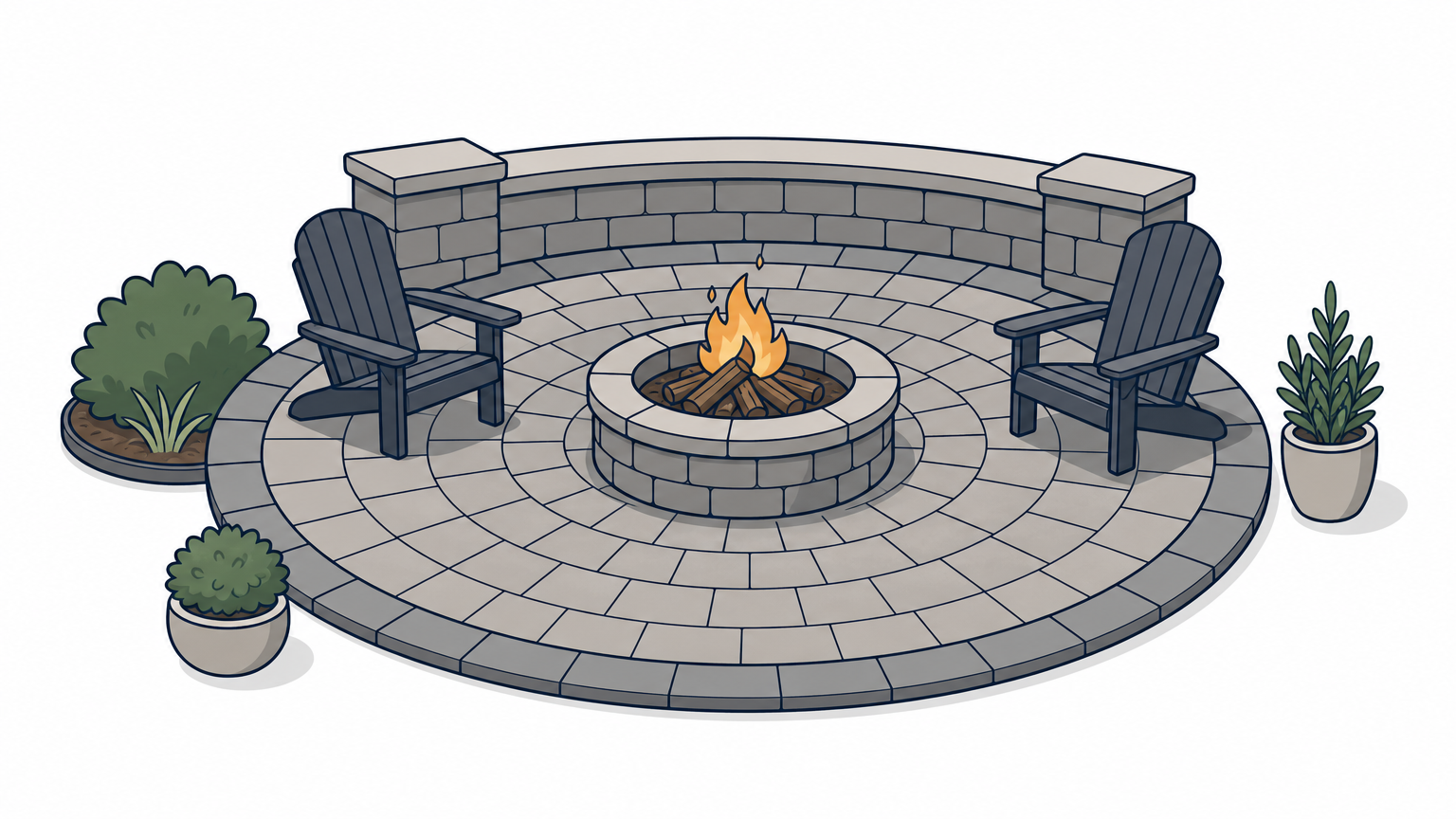
You center a fire pit in a circular paver pattern , with pavers radiating outward or laid in rings. A low seating wall wraps part of the edge. The wall doubles as extra seating and as a border, so you need fewer chairs. Circles take more cuts than straight layouts because most pavers are rectangular. Wedge-shaped units cut that down but narrow your choices.
The payoff is in the evening. Desert nights cool off quickly in winter, and a fire pit makes that the best time to be outside. A seating wall also helps with grade changes, which is where JR's retaining wall and hardscape construction work comes in.
Design the patio around the fire pit first, then fit everything else around it.
Who it suits and what to plan
This idea suits families and anyone who entertains after dark. Plan a circle roughly 10 to 12 feet across for a pit with chairs around it. Keep it clear of the house, overhanging branches and any pergola.
- Check HOA rules and local fire restrictions before choosing wood or gas.
- Decide the pit type early, since a gas line needs to go in before paving.
- Keep walking paths at least 3 feet wide around the seating wall.
6. Shaded pergola patio with lighting
In a hot climate, shade matters more than pattern. A paver patio under a pergola or shade structure gets used on days when an open slab is too hot to stand on.
How the design works
A pergola covers the dining or lounge zone , and pavers run beneath and around it. Lighting along edges, steps and walls makes the same space usable after sunset. Lighting is often an afterthought, but it adds safety and makes the patio feel larger at night. JR's lighting installation covers patios, walkways and accents for trees and architectural features.
Sequencing is where this design goes wrong. Post footings go in before the pavers , so you must mark exact post locations on your plan. Wiring for lights should also be run before the base is built. A footing or a conduit added after the pavers are laid means lifting and relaying the surface.
Locate every footing and light cable on the plan before the first paver is laid.
Who it suits and what to plan
This design suits anyone who wants to use the patio in summer or entertain at night. A light paver color under the shade helps reflect heat, and a dark band can sit along the edge.
- Confirm HOA approval and any permit needs for the pergola.
- Mark post and light locations on the layout before you request estimates.
- Choose a paver that is not slippery when wet, since misters and spills happen.
Pick the design, then plan the build
Choose herringbone for durability, large-format pavers for a modern look, a two-tone rug for zoned entertaining, gravel hybrids for budget, a fire pit circle for evenings, and a pergola layout for shade. Many patios combine two of these, such as herringbone with a pergola or a rug with a fire pit corner.
Whichever you pick, sketch the layout, mark footings and lights, and measure the space before you ask for a quote. JR's installs from your plan, so a clear drawing speeds up the estimate and avoids surprises on site. When you are ready, request a free on-site estimate from JR's Lawn Maintenance and bring the design you chose.